
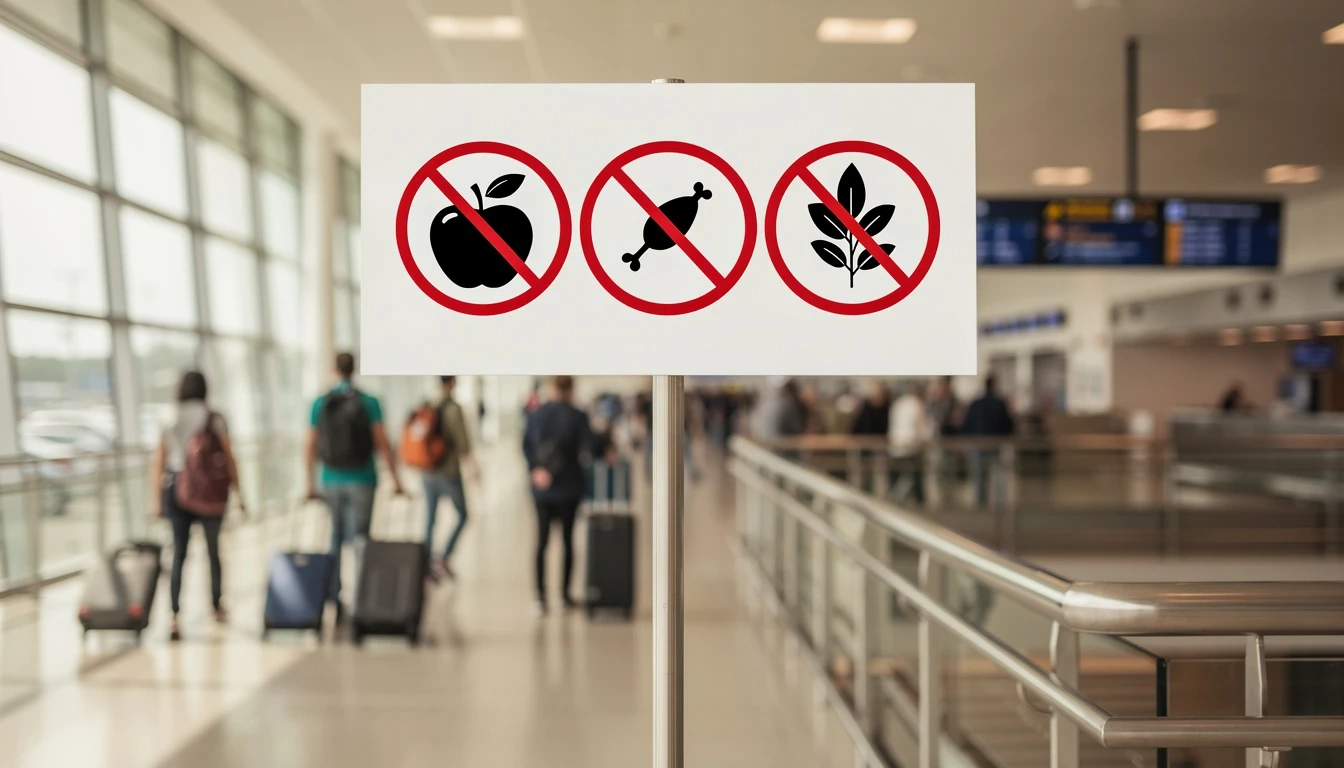
- Can You Bring Food Into Korea? The Short Answer
- What Foods and Agricultural Products Are Restricted When Entering Korea?
- How Much Food Can You Bring Into Korea Duty-Free?
- Do You Need to Declare Food at Korean Customs?
- What Happens If You Don’t Declare Food or Bring Prohibited Items?
- Are There Extra Restrictions on Meat During Animal Disease Outbreaks?
- Practical Tips: What to Pack and What to Leave Behind
- Need Help?
- Common Questions About Bringing Food Into Korea
Korean customs waves some snacks straight through and confiscates others on the spot. The difference usually comes down to whether you declared it, not what it actually is.
Packing spices, coffee, or a jar of your favorite hot sauce for the trip?
This guide sorts out what clears instantly, what’s restricted, and how to declare it the right way.
Can You Bring Food Into Korea? The Short Answer
Yes, with real limits. Commercially packaged, non-meat snacks and processed foods are fine in reasonable personal-use amounts.
Fresh fruit, vegetables, raw meat, dairy, and anything carrying soil or live organisms are restricted or banned outright. Anything in a restricted category must be declared on arrival, even when it sits well inside the weight and value limits.
Korea’s customs and quarantine rules exist to keep invasive pests and animal diseases out of the country, not simply to inconvenience travelers.
If you’re not sure whether something you’re carrying counts, the safest move is to declare it and let a customs or quarantine officer make the call rather than guess and risk confiscation or a fine. For how this fits into the rest of the arrival process, see our guide on how immigration and customs work in Korea.
- Generally fine in reasonable amounts: commercially sealed snacks, coffee, tea, chocolate, and other non-meat processed foods
- Restricted or subject to inspection: fresh fruit and vegetables, raw or processed meat, dairy, seeds, soil, live plants, and live seafood
- Always required: declaring any item in a restricted category on your arrival card, regardless of quantity
Quick gut check
If it’s fresh, raw, alive, or made from meat or dairy, assume it needs to be declared, and possibly inspected, before you find out the hard way.
What Foods and Agricultural Products Are Restricted When Entering Korea?
Korea restricts a specific set of categories to protect its agriculture, livestock, and food supply from pests and animal diseases. According to the Korea Customs Service, the following are restricted from entry and require quarantine clearance:
- Plants, fruits, and vegetables
- Agricultural, poultry, and forestry products
- Animal products, including meat, skin, and fur
- Livestock
- Live sea creatures, such as live fish and shellfish
Korea Customs Service’s own declaration guidance goes a step further than just raw ingredients: it groups meat, skin, and hair together with plants, fruit, vegetables, and live fish, and adds “agricultural, forest, livestock, and fishery products (including processed goods)” and “other foods” to the list of items travelers must declare.
In plain terms, dried, cured, canned, or otherwise processed versions of these products (think beef jerky, sausages, or packaged seafood) fall under the same declaration requirement as fresh ones, even though they’re not raw.
Korea’s Animal and Plant Quarantine Agency (APQA) breaks the declarable list down further by product type.
- Animal side: beef, pork, lamb, and chicken; processed meats like ham, sausage, jerky, and canned meat; bone-based products such as horns and animal bones; egg products (whole eggs, egg white, powdered egg); and dairy like milk, cheese, and butter
- Plant side: nearly all fresh fruits and vegetables, plus rice, rice bran, and straw-based products, unpeeled walnuts, unripe soybeans, unpeeled potatoes and sweet potatoes, wild ginseng, cultivated mushrooms, and saplings or cuttings from apple, pear, grape, or pine trees
Double-check before you pack
Fresh fruit, home-dried or cured meat, plants or hiking gear with soil still attached, and unshelled nuts or seeds all fall under the restricted categories above, so pack them expecting inspection or leave them out.
Food isn’t the only thing with its own packing rules. Spare batteries and power banks are capped separately under Korea’s 2-battery carry-on rule. See our spare batteries and power banks guide if you’re flying with electronics.
How Much Food Can You Bring Into Korea Duty-Free?
Korea’s general personal duty-free allowance for travelers is US$800, but agricultural, livestock, and fishery products are governed by a separate, more specific allowance, according to the Korea Customs Service.
To qualify for duty-free treatment, agricultural and food items must meet three conditions at the same time: the total weight must stay under 40kg, the total overseas purchase price must stay under 100,000 KRW (roughly USD 75), and the items must pass quarantine inspection. Within that overall cap, specific items also have their own individual weight limits:
| Item | Duty-Free Limit |
|---|---|
| Sesame oil | 5kg |
| Honey | 5kg |
| Pine nuts | 1kg |
| Beef | 10kg |
| Pork | 10kg |
| Bracken (fern) and deodeok | 5kg |
| Other agricultural/food items | 5kg each |
| Ginseng (fresh, white, or red) | 300g |
| Deer antlers | 150g |
| Other oriental medicine materials | 3kg each |
Exceeding a limit can cost you more than just the excess.
Per the Korea Customs Service, going over the weight or value threshold for an item can make the entire quantity, not just the amount above the limit, subject to duty. When in doubt, bring less, or declare it and ask.
Do You Need to Declare Food at Korean Customs?
Yes. Carrying anything from the restricted categories above means declaring it, duty-free limits or not.
These are two separate questions. Staying under the weight and value caps means you probably won’t pay duty. Staying under those caps doesn’t excuse you from declaring the item.
In practice, this happens through the same e-Arrival Card and Q-code process used for the rest of your customs declaration. If you haven’t seen how that process works end-to-end, our guide on how immigration and customs work in Korea covers the full arrival-card and Q-code flow; the food and agricultural section is simply one part of that same declaration.

How Food Declaration Fits Into Arrival
- Fill in the food/agricultural item section of your e-Arrival Card (or paper declaration form) before or during your flight. See our visa and K-ETA guide for how the e-Arrival Card itself works
- Follow signage for the declaration (red) channel if you’re carrying any item that needs to be declared
- Present the item(s) to a customs or quarantine officer for inspection when asked
- Pay any applicable duty, or have the item confiscated on the spot if it’s prohibited or fails inspection
What Happens If You Don’t Declare Food or Bring Prohibited Items?
A financial penalty at minimum. Confiscation or legal trouble at worst.
The Korea Customs Service adds a duty surcharge to any passenger who fails to declare goods voluntarily: 40% on a first offense, rising to 60% for repeat failures.
That 40-60% declaration surcharge covers the food and agricultural categories above. Customs Service guidance already lists them among the items travelers must declare.
Separately, items that are outright prohibited or restricted from entry, including undeclared plants, fruit, meat, and other agricultural or animal products, are confiscated when discovered. Korean customs law can also impose punishment on travelers found carrying a prohibited or restricted item during a customs investigation, on top of losing the item itself.
Undeclared isn’t a shortcut.
Skipping the declaration doesn’t just risk losing the item. It adds a 40-60% duty surcharge on top, and repeated or serious cases can lead to further penalties under customs law. Declaring costs you a few extra minutes; not declaring can cost a lot more.
Are There Extra Restrictions on Meat During Animal Disease Outbreaks?
Yes, and these restrictions can change with little notice. Korea’s Animal and Plant Quarantine Agency (APQA) and Customs Service periodically tighten or fully ban imports of meat, dairy, and other livestock products from specific countries or regions during active outbreaks of animal diseases such as African Swine Fever or avian influenza, on top of the general restrictions already covered above.
The affected countries shift as outbreaks are reported and resolved, so this article can’t hold a fixed list.
Traveling from a region with a recent or ongoing animal disease outbreak? Call APQA’s animal quarantine import line at +82-32-740-2671 before you pack any meat, dairy or livestock-derived product.
Assume country-specific bans can stack on top of the standard rules.
Rules can change by country and by outbreak.
Always check the current status for your departure country on the official APQA or Korea Customs Service site rather than relying on what was true for a previous trip.
Practical Tips: What to Pack and What to Leave Behind
The lowest-risk approach is to stick to commercially packaged, shelf-stable food and leave fresh or homemade items at home. Sealed, factory-packaged snacks, coffee, tea, and confectionery generally move through customs smoothly in personal-use quantities, especially when they don’t contain meat or dairy as a primary ingredient.
- Pack it with confidence: commercially sealed, shelf-stable snacks, instant coffee, tea, and packaged confectionery
- Declare it and expect inspection: dried or cured meat, packaged seafood, honey, sesame oil, and other items on the duty-free limit table above
- Leave it behind if you can: fresh fruit and vegetables, raw or vacuum-packed meat, unpasteurized dairy, uncooked seafood, and any plant with soil still attached
When in doubt, declare it.
A declared item that turns out to be fine costs you a short conversation with a customs officer. An undeclared item that turns out to be restricted costs you the item, plus a duty surcharge.
Need Help?
Korea Customs Service Call Center
- Phone Number: 125 (toll-free, nationwide)
- Use this line for questions about declaration requirements, duty-free allowances, and prohibited/restricted items
Animal and Plant Quarantine Agency (APQA)
- Animal quarantine (meat, dairy, egg, and other animal products): +82-32-740-2671 (bringing items into Korea) / +82-32-740-2660~1 (taking items out of Korea)
- Plant quarantine (fruit, vegetables, seeds, saplings, and other plant products): +82-32-740-2079 (bringing items into Korea) / +82-32-740-2077 (taking items out of Korea)
Traveling with a dog or cat instead of food items? Pets fall under a separate set of APQA rules. See our pet travel and quarantine guide for microchip, rabies antibody test, and quarantine certificate requirements.
Useful Official Websites
Common Questions About Bringing Food Into Korea
Yes, in general. Commercially packaged, non-meat snacks and processed foods are usually fine in personal-use amounts, while fresh fruit, vegetables, raw meat, dairy, and anything with soil or live organisms are restricted and must be declared.
Fresh fruit falls under Korea’s restricted agricultural categories and requires quarantine inspection on arrival. It must be declared, and it may be confiscated depending on the fruit and its origin.
In limited amounts, yes. Beef and pork each have a 10kg duty-free allowance under Korea Customs Service rules, as long as the total agricultural weight stays under 40kg, the value stays under 100,000 KRW, and the meat passes quarantine inspection. It must still be declared regardless of quantity, and additional country-specific bans can apply during animal disease outbreaks.
Yes. Staying within the weight and value limits generally means you won’t owe duty, but it doesn’t remove the requirement to declare the item: declaration and duty-free treatment are separate questions.
You’ll face an additional duty surcharge, 40% for a first-time failure to declare and 60% for repeated cases, and any prohibited or restricted item can be confiscated, with possible further penalties under Korean customs law.
Not entirely. Korea Customs Service’s declaration guidance explicitly includes “agricultural, forest, livestock, and fishery products (including processed goods),” so items like jerky, sausages, or packaged seafood still need to be declared, even though they’re less likely to be outright prohibited than fresh or raw versions.
Yes, within specific limits. For example, fresh, white, or red ginseng has a 300g duty-free allowance, and deer antlers are capped at 150g, with other oriental medicine materials generally allowed up to 3kg each.
Check the Animal and Plant Quarantine Agency (APQA) official site, or call their animal quarantine import line at +82-32-740-2671, before you travel. Restrictions tied to animal disease outbreaks like African Swine Fever or avian influenza can change by country with little notice.
On the animal side: beef, pork, lamb, and chicken; processed meats like ham, sausage, jerky, and canned meat; bone-based products such as horns and animal bones; egg products; and dairy like milk, cheese, and butter. On the plant side: nearly all fresh fruits and vegetables, rice and rice-based products, unpeeled walnuts, unripe soybeans, unpeeled potatoes and sweet potatoes, wild ginseng, cultivated mushrooms, and saplings or cuttings from fruit or pine trees.
When in doubt, declare it and let an officer decide. That costs you two minutes. Guessing wrong costs a fine.
The Korea Customs Service answers questions at 125 (toll-free, nationwide) if you want to check before you fly.
Pack accordingly, and customs should be the dullest part of your trip.



Comments
Leave a comment